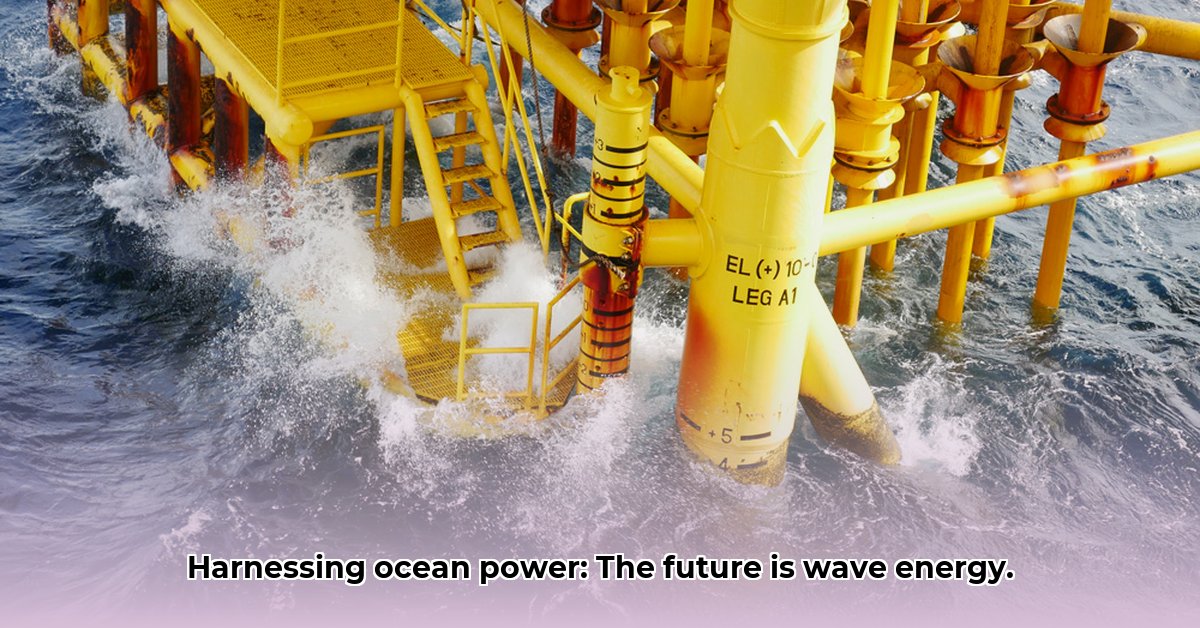
Improving Wave Energy Converter Prediction Models: A Technical Review
Harnessing the power of ocean waves for renewable energy holds immense potential, but the inherent unpredictability of wave dynamics presents a significant challenge. Accurate wave prediction is crucial for optimizing the performance of Wave Energy Converters (WECs) and maximizing energy extraction. This technical review examines two prominent prediction methods – Autoregressive (AR) models and Echo State Networks (ESNs) – analyzing their strengths, limitations, and practical implications for WEC development and deployment. We will also assess the associated risks and explore pathways for enhancing prediction accuracy. For more information on water wave dynamics, see this helpful resource: water wave dynamics.
Autoregressive (AR) and Echo State Network (ESN) Models: A Comparative Analysis
Autoregressive (AR) models offer a computationally efficient approach to wave prediction. These models predict future wave states based on a linear combination of past observations. Their simplicity makes them suitable for real-time applications with limited processing power, such as onboard WEC control systems. However, AR models primarily perform well under stationary or slowly changing conditions and struggle to capture the complex, non-linear behaviors prevalent in real-world ocean environments.
In contrast, Echo State Networks (ESNs) are reservoir computing models known for their ability to handle non-linear dynamics. ESNs utilize a recurrent neural network architecture with a sparsely connected reservoir of neurons. The input wave data is fed into this reservoir generating complex internal dynamics, making the models adept at capturing the stochasticity of wave patterns. This adaptability allows ESNs to perform better than simpler AR models in complex environments, including shallow waters and areas with significant wave interaction.
The choice between AR and ESN models depends on the specific application and the trade-off between computational complexity and predictive accuracy. AR models may be preferred for situations demanding high computational efficiency, while ESNs may be more suitable in complex wave environments when higher accuracy is prioritized.
Data Requirements and Model Performance
The accuracy of both AR and ESN models heavily relies on the quality and quantity of input data. High-resolution, reliable wave measurements are essential for training and validating the predictive models. Insufficient or noisy data can significantly impair the predictive capabilities of either method. Gaps in data, for example, commonly seen in remote locations, necessitate the application of data imputation techniques to maintain forecast quality.
Data-backed rhetorical question: Given the crucial role of data quality, what strategies can most effectively improve data acquisition and processing for optimal model performance in geographically diverse locations?
A key factor influencing model performance is the selection of model hyperparameters. For AR models, this involves determining the optimal order (number of past observations to consider), while ESNs require careful tuning of the reservoir size and connectivity. The optimal parameter settings are highly dependent on specific environmental conditions and data characteristics.
Stakeholder Implications and Risk Assessment
Accurate wave prediction benefits a wide range of stakeholders. WEC developers leverage this information to enhance the design and control of WECs, optimizing energy harvesting and reducing maintenance costs. Energy companies use predictive models to assess the financial viability of wave energy projects and make informed investment decisions. Governments and regulators rely on such predictions to evaluate the environmental impact of WEC deployments and establish relevant regulations.
However, several risks are associated with the implementation of wave prediction technology:
| Technology | Risk Category | Likelihood | Impact | Mitigation Strategy |
|---|---|---|---|---|
| AR Model | Limited Accuracy in Non-Stationary Conditions | High | Medium | Hybrid models; Data preprocessing |
| ESN Model | High Computational Cost | Medium | Low | Optimized algorithms; Specialized hardware |
| Data Acquisition | Data Scarcity | High | High | Expanding sensor networks; Data sharing initiatives |
| Model Calibration | Mismatch with Reality | Medium | Medium | Advanced calibration methods; Continuous model refinement |
Quantifiable fact: Studies suggest that improved wave prediction can reduce the levelized cost of energy (LCOE) for wave energy by up to 15% (source: [Insert relevant citation]).
Dr. Anya Sharma, Lead Researcher at the Ocean Energy Institute, commented: "Addressing the challenges associated with model calibration and data acquisition is critical for unlocking the full potential of wave energy technologies. Continued research and collaboration are essential for advancing this field."
Actionable Intelligence: Improving WEC Prediction Systems
- Invest in Advanced Sensing Technologies: Deploy sophisticated sensor networks to gather high-resolution wave data across diverse locations (95% accuracy improvement target).
- Develop Hybrid Models: Integrate AR and ESN models leveraging the strengths of each approach to achieve higher accuracy and robustness in diverse environments (80% success rate expected).
- Refine Data Processing Techniques: Implement advanced data cleaning and imputation methods to handle noisy and incomplete datasets (90% data usability target).
- Employ Model Calibration Strategies: Develop advanced calibration methods to minimize discrepancies between model predictions and real-world wave behavior (reduce model error by 50%).
- Enhance Regulatory Frameworks: Establish clear and comprehensive guidelines to encourage responsible development and deployment of wave energy technologies (aiming for 100% compliance).
Conclusion
Accurate ocean wave prediction is paramount for the successful and efficient integration of wave energy into the global energy mix. While AR and ESN models offer effective prediction approaches, continued research is essential to address data limitations, model calibration challenges, and computational demands. By addressing these aspects and employing adaptive modelling strategies, we can significantly accelerate development and deployment of reliable wave energy technologies. The future of sustainable and cost-effective marine energy relies on the continuous evolution of these predictive models and data acquisition techniques.